
Choosing a roofing nailer in the United Kingdom means balancing speed against control: go pneumatic for all-day shingling power, or go cordless for ladder-and-roof freedom? Add in confusing coil nail types, weight fatigue on pitched roofs, and Britain's damp, windy weather, and the wrong pick means jams, bent nails and sore arms.
Top Recommendations at a Glance


Key Takeaways and Quick Advice
|
Tacwise FCN55V Air Coil Nail Gun
|
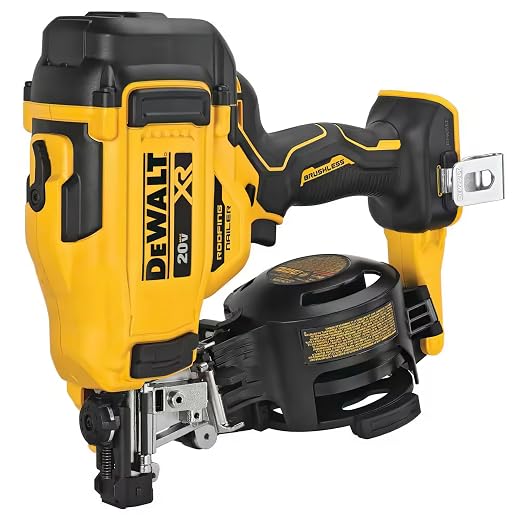
Cordless Roofing Nailer
|
Makita AN454 45mm Roofing Nailer
|
|
|---|---|---|---|
|
|
|
|
|
| Build & Material | Magnesium body at 2.4kg with soft grip, plastic coil magazine | Cordless platform build with balanced ergonomics, heavier with battery fitted | Jobsite-grade Makita construction at 3.3kg with metal magazine components |
| Power & Operation | Pneumatic coil operation with sequential and contact firing plus adjustable depth | Battery-powered cordless firing, no compressor or hose, slower cadence than pneumatic | Pneumatic 45mm system with sequential and contact trip modes plus tool-less depth |
| Capacity / Dimensions | Wide length range, accepts both flat-top and conical-top coils | Coil roofing magazine optimised for portability and small to medium runs | 120-nail coil magazine in 45mm class with adjustable shingle guide |
| Standout Feature | True 2-in-1 flat-top and conical-top coil compatibility | True cordless roofing performance for hose-free rooftop workflow | Tool-less depth and shingle guide system for fast, flush setting |
| Best For | Versatile all-round roofing, framing assist and finish control | DIY repairs, small roofs, sheds and mobile work without compressor | Large consistent shingling runs needing fast setup and fewer reloads |
| Check Price on Amazon | Check Price on Amazon | Check Price on Amazon |
01
One Lightweight Gun That Fires Both Flat and Conical Coils
The FCN55V stands out for its rare 2-in-1 magazine that accepts both flat and conical top coils from 25 to 57mm, making it unusually versatile for fencing, decking, cladding, pallets and roofing tasks. Its magnesium alloy body keeps weight to a manageable 2.4kg while the nylon drum, rubber grip and low vibration design support longer sessions without excessive fatigue. Verified owners frequently praise reliable driving power, clean countersinking via the depth adjuster, and the choice of sequential or bump firing for control versus speed. The slender non-marking nose and 360-degree exhaust add practical precision on site. That said, sentiment is not flawless, with a minority reporting initial air leaks, misfeeds or jams until the tool is generously oiled and nails are seated high in the guide. Depth dial drift and a relatively light plastic magazine were also noted. With correct setup, lubrication and genuine spec nails, most users describe it as a hardworking all-rounder.
- Versatile 2-in-1 design accepts both flat and conical coils across a wide length range
- Lightweight balanced build with soft grip and low vibration for extended use
- Dual firing modes and adjustable depth deliver control for finish work and speed for framing
- Complete kit with carry case, hex keys, safety glasses and oil adds ready-to-work value
- Needs generous initial lubrication and careful nail alignment to avoid misfires and jams
- Depth adjustment dial can drift with vibration and plastic magazine feels less impact resistant
02
Ditch the Compressor and Roof Freely Without Losing Drive Power
The DEWALT DCN45RNB rethinks roofing workflow by eliminating compressor, hose and cord without giving up coil-fed convenience. Market research shows its core appeal is freedom on the roof, with verified owners highlighting easier setup for repairs, small jobs and punch-list work where dragging pneumatic gear feels excessive. Construction centers on a robust housing with familiar DEWALT ergonomics, balanced grip and coil magazine designed for standard roofing nails, supporting steady bump operation once users dial in depth and nail compatibility. Satisfaction trends strongly positive at 4.4 stars, especially for durability and time savings, though feedback is not unanimous. Weight is the main trade-off, approaching nine pounds with a large battery installed, which adds fatigue on long shingle runs. Some owners also note slower cycle speed versus air tools and occasional jamming if nail selection is off. Best viewed as a mobility-first complement to pneumatic for pros and a highly capable primary tool for repair-focused users.
- Eliminates compressor, hose and extension cord for faster rooftop workflow
- Strong verified owner satisfaction for small jobs and repair durability
- Familiar DEWALT ergonomics with balanced handling for coil nailing
- Consistent driving performance once paired with compatible coil nails
- Heavy with battery installed, which can fatigue during full-day shingling
- Slower firing cadence than pneumatic and sensitive to nail selection
03
Pro-Level Roofing Speed With Tool-Less Precision for Clean, Flush Nailing
The Makita AN454 is built around a rugged pneumatic platform designed for sustained roofing work, operating across a wide 70 to 120 PSI range for quick, consistent driving. Verified owner sentiment points to reliable flush nailing on felt shingles and asphalt work, aided by tool-less depth adjustment and a tool-less shingle guide that speeds alignment on the roof. The adjustable 120-nail coil canister accepts 19 to 45mm wire-collated nails, while the flat contact arm helps clear tar buildup during long runs. At 3.3kg it feels planted without being unwieldy, and the included hook, oil supply and safety goggles add jobsite readiness. Most owners praise its Makita durability and low-maintenance operation over years of use. Caveats center on nail compatibility, with some buyers struggling to source correct coils and reporting jams or double-fires when mismatched fasteners are used. Proper fastener selection and pressure tuning appear key to trouble-free performance.
- Quick, consistent pneumatic driving with contact trip and sequential modes
- Tool-less depth and shingle guide adjustments speed setup on the roof
- 120-nail magazine reduces reloads during large roofing runs
- Strong verified owner satisfaction for durability and low maintenance
- Correct coil nail sourcing can be confusing in some regions
- Mismatched fasteners can cause bending, jams or double feeds
 04
Cut the Compressor and Keep Full Roofing Power
Built around DeWALT’s 20V Max brushless platform, this 15-degree coil roofing nailer is engineered to replace pneumatic setups for shingle, underlayment and repair work. Market research shows owners consistently praise its hard-hitting drive, fast spin-up in bump mode, and straightforward coil loading that keeps rhythm on a slope. The flywheel design holds peak speed longer than earlier generations, which verified users say delivers more consistent depth, though many need to back the depth adjuster out to avoid overdriving. Ergonomically it is undeniably bulky at just over 3kg plus battery, a trade-off common to cordless flywheel tools, but most roofers accept the weight to eliminate hoses and compressors. Battery drain is higher due to extended motor run time, so carrying spares is essential for full days. Overall sentiment across 631 ratings skews strongly positive, positioning it as a durable, jobsite-ready option for pros already invested in the battery ecosystem.
- Strong, consistent driving performance praised by verified owners
- True cordless operation eliminates hoses and compressor setup
- Fast spin-up and smooth bump firing support productive pace
- Tough DeWALT construction built to withstand daily roofing use
- Heavy and bulky versus pneumatic rivals, tiring on long roofing runs
- Runs hot on depth and uses more battery due to extended motor run time
 05
The Contractor-Trusted Coil Nailer Built for Fast, Relentless Shingle Work
The RN46 has earned its long-standing reputation as a jobsite staple, and verified owner sentiment shows why. Its lightweight aluminum housing balances durability with manageable weight for all-day roof work, while carbide nosepiece inserts and aggressive wear guards help it shrug off abrasive shingles and decking. Owners consistently praise the one-door coil loading, fast bump-fire operation, and depth adjustment that makes it easy to dial flush drives as temperatures shift. The zero-nail lockout is another widely appreciated touch, preventing dry fires and signaling reload time. Ergonomics are geared toward production speed rather than precision trim work, with a bump-focused trigger that can double-fire if used in sequential mode. Occasional jams are reported, typically linked to damaged coils or low air pressure, and clearing can require effort. Tip corrosion with storage is also noted without oiling. Overall, market feedback positions it as a rugged, dependable choice for roofers and ambitious DIYers tackling full replacements.
- Tough aluminum build with carbide inserts holds up to abrasive roofing surfaces
- Fast bump-fire action dramatically speeds large shingle installations
- Easy depth adjustment helps maintain flush drives in heat and cold
- Zero-nail lockout prevents blank fires and clearly signals reload time
- Bump-oriented trigger can double-fire when attempting precise single-nail placement
- Occasional jams can be stubborn to clear, often tied to bent coils or low air pressure
Buyer Questions and Expert Answers
Should I choose pneumatic or cordless for roofing in the United Kingdom?
Choose pneumatic if you do full roofs, large shingle areas or frequent use — it fires faster, drives more consistently and stays lighter in hand. Choose cordless if you mainly do repairs, sheds, porches or work across multiple sites where hauling a compressor and hose up a ladder is impractical. Many UK roofers keep pneumatic for volume and cordless for call-outs.
What coil nails do these roofing nailers use?
Most UK roofing coil nailers use 15-degree wire-collated coil roofing nails, typically 19mm to 45mm. The key difference is flat-top vs. conical-top coils — the Tacwise FCN55V accepts both, which simplifies sourcing, while others may need a specific coil type. Always match diameter, length and galvanised or stainless coating for outdoor weather resistance.
How important is weight and balance on the roof?
Very important. A difference of nearly 1kg feels huge after hundreds of nails overhead or on a slope. A lightweight 2.4kg balanced gun reduces arm fatigue and improves accuracy. Heavier cordless models or 3.3kg pneumatic models are manageable for short sessions but benefit from a well-padded grip, shoulder strap hook, and planned breaks on full-day jobs.
How do I prevent jams, misfires and bent nails?
Use the exact coil type and length specified, seat the coil correctly and keep the feed path clean. Lubricate pneumatic tools as instructed before use, set depth correctly rather than over-driving, and check air pressure or battery charge. If you get double-feeds or bending, stop — it is almost always a mismatched fastener or worn feed pawl, not a need for more force.
Do I need adjustable depth and a shingle guide?
Yes for neat, weathertight work. Adjustable depth lets you set nails flush without cutting through felt or shingles, which is vital in wet UK conditions. A shingle guide keeps courses straight and spacing consistent, speeding up large runs and improving the finished look. Tool-less adjustment is a major time-saver when moving between materials.
The Bottom Line
- 🏆 Top Overall Choice: Tacwise FCN55V Air Coil Nail Gun for Flat and Conical Top Coil Nails — best blend of 2-in-1 compatibility, light magnesium balance and dual-mode control
- 💰 Best Value: Cordless Roofing Nailer — ideal for hose-free repairs and small jobs with proven owner satisfaction
- ⭐ Premium Pick: Makita AN454 45mm Roofing Nailer — top option for fast, consistent large runs with 120-nail capacity and tool-less setup
For most UK buyers, versatility and sustained speed matter most on a roof, which is why a lightweight pneumatic that handles both common coil types is the safest all-round investment. If you prioritise grab-and-go convenience for repairs without a compressor, cordless is transformative despite extra weight and slower cadence. For high-volume, uniform shingling where setup speed and fewer reloads pay off, a dedicated premium pneumatic with tool-less guides is worth it. Match the gun to your nail supply, roof size and how often you will carry it up a ladder.
Leave a Reply