
Should you prioritise foolproof threading, rock-solid metal build, or maximum stitch versatility? For UK home sewists, that is the real overlocker dilemma. Choose too basic and jersey still puckers, choose too complex and threading puts you off sewing altogether.
Top Recommendations at a Glance


Key Takeaways and Quick Advice
|
Brother M343D Overlocker
|
FEIYUE FY505 Serger Overlock Machine, 2/3/4 Thread Capability
|
Jaguar Starter Overlocker Serger 435D
|
|
|---|---|---|---|
|
|
|
|
|
| Build & Material | Lightweight plastic housing over metal internals, compact and portable | Heavy-duty metal frame with precision carbon steel blade | Solid metal-chassis construction for stable, low-vibration feel |
| Power & Operation | 3/4-thread, up to 1300 stitches per minute, differential feed, F.A.S.T looper aid | 2/3/4-thread, high-speed domestic operation, differential feed, adjustable length/width | 3/4-thread, differential feed, adjustable stitch length and cutting width |
| Capacity / Dimensions | Compact domestic footprint, easy to position and store; handles silk to denim and corduroy | Full-size domestic footprint, stable base; handles light to heavy fabrics plus rolled hem | Standard domestic footprint, stable base; handles silk and Lycra to denim |
| Standout Feature | F.A.S.T sliding lower-looper threading with colour-coded guides and door diagram | Versatile 2-thread option with built-in rolled hem for narrow decorative edges | Simple, reliable 3-4 thread stitching with smooth control on stretch fabrics |
| Best For | First-time overlocker users wanting the easiest threading experience | Value-focused makers wanting maximum stitch options on a sturdy frame | Everyday home sewists wanting a solid, stable long-term machine |
| Check Price on Amazon | Check Price on Amazon | Check Price on Amazon |
01
The beginner-friendly overlocker that turns neat, professional finishes into everyday sewing
Positioned as the category leader, the Brother M343D earns its reputation by making overlocking approachable rather than intimidating. Market research and verified owner sentiment consistently highlight its colour-coded threading path and F.A.S.T lower looper system, which help beginners get from box to first neat seam quickly with the help of the door guide and instructional DVD. In daily use, the 3 or 4 thread capability, adjustable stitch length and width, differential feed and foot pressure handle everything from delicate silk to denim and corduroy with clean, strong, trimmed edges. Ergonomics are thoughtful, with front-access dials, bright daylight LED lighting that keeps colours true, free-arm conversion for cuffs and sleeves, and a compact lightweight frame that is easy to move and store with its cover. Owners note more plastic feel and noise than vintage metal machines, plus missing extras like a blind hem foot, yet satisfaction remains very high for reliability and ease.
- Exceptionally easy to thread for a serger, with sliding lower-looper aid and clear door diagram
- Consistent, neat results across wide fabric range from silk and jersey to denim and corduroy
- Compact, lighter design that is easy to position, transport and store
- Thoughtful usability touches including LED daylight lighting, free arm and 3-year warranty backing
- Plastic-heavy construction feels less premium and runs slightly noisier than older metal machines
- No blind hem foot or trim catcher in the box, so useful extras require separate purchase
02
Pro-Style Edges, Rolled Hems and Stretch Seams Made Simple
The FY505 stands out as a practical, high-speed overlocker built around a heavy-duty metal frame wrapped in a compact plastic-metal housing. Verified owner feedback consistently highlights its ability to deliver clean, professional-looking edges, rolled hems and stretch-friendly seams across light to medium-heavy fabrics, supported by adjustable differential feed, stitch length control and a bright LED work light. The carbon steel cutter earns praise for crisp trimming, while color-coded guides and numbered loopers simplify the otherwise fiddly threading process once users get past the initial learning curve. At up to 1100 stitches per minute, it handles batch finishing efficiently for garment makers and hobbyists. Critiques focus on documentation clarity for absolute beginners and isolated quality niggles such as stiff mechanisms or loose feet. Overall, market sentiment positions it as a dependable, easy-to-live-with upgrade for sewists seeking versatility without complexity. It suits regular home use where speed, neat finishing and straightforward maintenance matter most.
- Versatile 2/3/4-thread options cover overlocking, trimming and built-in rolled hems
- Sturdy metal frame and sharp carbon steel blade deliver clean, durable edge finishing
- Color-coded guides and numbered loopers shorten setup time after initial practice
- Fast 1100-stitch-per-minute performance with differential feed, stitch control and LED lighting
- Threading still has a learning curve and manual clarity can frustrate first-time overlocker users
- Isolated owner reports of stiff mechanisms, thread breakage or minor fit-and-finish niggles
03
A solid, beginner-friendly serger for neat, professional edges at home
Designed as an accessible entry into overlocking, the Jaguar 435D combines a plastic exterior with a metal internal chassis, and verified owners consistently note its substantial, stable feel on the table compared with lighter starter machines. The 3-4 thread capability with differential feed handles a wide range from fine silk to denim and stretch knits, helping prevent puckering and wavy edges while trimming and finishing in one pass. Ergonomics are beginner-minded, with colour-coded threading paths, on-machine diagrams, built-in storage, lint tray and bright LED lighting for visibility. Day-to-day sentiment skews positive, with many newcomers reporting quick success hemming and finishing garments after initial setup, plus praise for quiet, steady stitching. Balance comes from threading: while some find the guides straightforward, others report a steep learning curve and a manual that could be clearer, often turning to online videos for help. Overall it suits patient beginners seeking durability and versatility over instant mastery.
- Reassuringly solid, stable feel thanks to metal chassis construction
- Versatile across fabrics from silk and Lycra to denim
- Differential feed improves control on tricky stretch materials
- Generous starter bundle with threads, tools, spare blade and storage
- Threading has a learning curve and can frustrate complete beginners
- Instruction manual feels basic, many owners rely on online tutorials
 04
Pro-level edges and quiet power, ready to sew straight out of the box
Positioned as an entry-level yet sturdy overlocker, the 9300DX earns its long-standing reputation through thoughtful engineering rather than gimmicks. Market research shows its alloy-steel chassis and metal internal gearing deliver a stable, quiet stitch at up to high speeds, inspiring confidence across light summer fabrics, knits, towelling and even heavy upholstery-weight chenille. Owners consistently highlight practical ergonomics: colour-coded threading paths, adjustable foot pressure, differential feed for stretch and sheer materials, and a rolled-hem function that engages without swapping the needle plate. The compact footprint suits smaller sewing rooms while the 8kg weight keeps vibration low. Sentiment across hundreds of verified owners skews strongly positive, especially around professional-looking edge finishes and out-of-box readiness with pre-threading. Trade-offs are typical for the class — full rethreading requires patience and good lighting, and a few expected accessories are absent. Overall, it reads as a dependable, beginner-welcoming workhorse for regular garment and home-decor finishing.
- Smooth, quiet running with stable feeding across fine to heavy fabrics
- Arrives pre-threaded with clear colour-coded guides for easier learning
- Metal gear construction feels durable and built for regular use
- Differential feed plus adjustable foot pressure tames stretch and sheer materials
- Full 4-thread rethreading still takes practice, especially the lower looper area
- Owners note missing extras like lint brush and spool thread arresters
- Included DVD manual feels dated and language options are limited
 05
Heavy-duty stitching power built to finish thick fabrics with confidence
Positioned as part of Singer’s Heavy Duty family, the HD0405S is designed for sewists who regularly finish seams, work with denim, fleece and layered fabrics, and want a steadier, more substantial machine than entry-level sergers. Market data points to a 6.2kg chassis with a compact footprint that feels planted on the table without dominating a sewing space, while the corded electric drive delivers consistent speed for edge finishing and trimming. In daily use, verified owners most often highlight confident handling of thicker materials, neat stitch formation and surprisingly straightforward threading once the initial learning curve is passed. Ergonomics are simple and functional, with accessible dials and a familiar layout for Singer users. Satisfaction is broadly positive at 4.4 stars, though feedback is not unanimous. Noise level is the most common trade-off, and a small minority report vibration or out-of-box alignment issues requiring return.
- Handles thicker materials more confidently than many entry-level rivals
- Easy threading and intuitive dial layout once initial setup is learned
- Produces neat, professional-looking overlock stitches on varied fabrics
- Solid, planted feel and compact footprint suited to regular home use
- Runs noticeably noisy during operation according to multiple owners
- Initial setup and threading can feel fiddly for complete beginners
- Isolated reports of vibration and casing alignment point to variable quality control
 06
Clean, pro-level edges straight out of the box without the learning curve
The Janome 8004D positions itself as an accessible entry into overlocking, pairing a metal-framed compact chassis with Janome’s long-standing reputation for reliable stitch formation. Market research shows its 3 and 4-thread capability, rolled hem and flatlock options, plus differential feed and adjustable cutting width cover the core techniques most home sewists actually use, from garment seams to tidy edge finishes on stretch and heavier fabrics like towelling. Ergonomics favor newcomers, with colour-coded threading guides, clear dials for length, width and tension, and factory pre-threading that verified owners consistently flag as confidence-building for first setup. Owners describe quiet operation, clean consistent stitching, and smooth feeding even where a regular machine skips. Trade-offs are modest but worth noting, including a compact footprint that feels less roomy for large projects, no included dust cover, and threading that still looks intimidating until you follow the manual and online tutorials.
- Arrives pre-threaded and ready to sew, which owners say removes first-time setup anxiety
- Smooth, powerful feeding on tricky stretch knits and heavier fabrics with clean stitch results
- Quiet, compact and lightweight metal build that is easy to place and store
- Clear instruction manual plus colour-coded guides and widely available model-specific tutorials
- No dust cover included, so you will need separate storage protection
- Compact bed and footprint can feel tight on larger projects
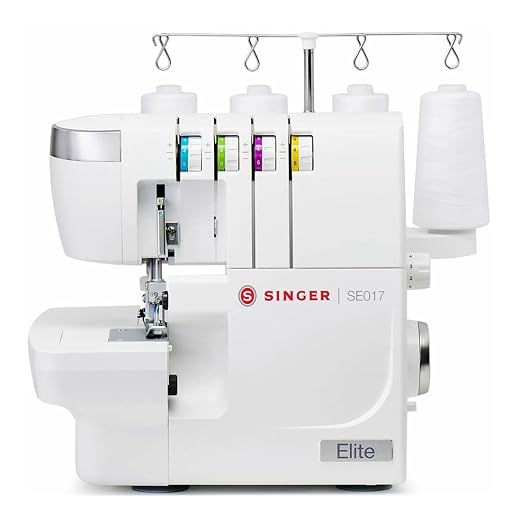 07
Quiet, versatile finishing with 6 stitch options and frustration-free threading
Positioned as Singer’s accessible Elite-series serger, the SE017 pairs a metal internal frame with a compact 6.5kg footprint that owners describe as stable yet easy to move and store. Market research shows its headline appeal is versatility for the tier: 2, 3 and 4-thread capability across six stitch types, including true two-thread edging and rolled hems, plus adjustable differential feed, stitch length and width, and a removable free arm for cuffs and circular seams. Verified owners consistently highlight smooth, quiet high-speed operation up to 1300 stitches per minute, with clean results on corduroy, layered wovens and stretch knits once tension is dialled in. Threading is repeatedly called manageable for first-time overlocker users thanks to colour-coded paths, pre-threaded tie-on strands and the industry-first lower-looper LED for visibility, supported by Singer’s video guidance. Trade-offs emerge around basic accessories, no thread cones included, and occasional speed-control and knife-dial legibility niggles.
- True 2-3-4 thread versatility with six stitches for wovens, knits and rolled hems
- Smooth, quiet and powerful feeding even on thick layered fabrics
- Colour-coded threading plus lower-looper light eases setup for beginners
- Compact metal-frame build with free arm for cuffs and small circular work
- Foot pedal speed control can feel abrupt and hard to feather slowly
- Knife-width dial markings are hard to read, often requiring test runs
- Basic bundled tools and no thread cones included in the box
Buyer Questions and Expert Answers
Do I need an overlocker if I already have a sewing machine?
If you sew jersey, stretch fabrics, or want professional inside seams, yes. A sewing machine can do a zigzag or overcast stitch, but an overlocker trims, seams and finishes in one pass with far more stretch and durability, and prevents fraying cleanly.
How difficult is threading an overlocker for a complete beginner?
It is the biggest learning curve. Expect 3-4 threads and loopers instead of one needle path. Models with colour-coded guides, numbered loopers and a sliding lower-looper aid shorten practice time significantly. Most owners master it after a few guided re-threadings and keeping the door diagram handy.
What is the difference between 2-thread, 3-thread and 4-thread?
4-thread gives a strong seaming plus overcasting stitch ideal for knit garments. 3-thread is perfect for neatening single layers and finishing edges. 2-thread uses less thread for lightweight fabrics and rolled hems on scarves, napkins and delicate silks. A 2/3/4 machine is the most versatile.
Can these overlockers handle both thick denim and stretch jersey?
Yes, within domestic limits. Use differential feed to stop jersey stretching or puckering, adjust stitch length and cutting width, and use correct needles and thread. For very thick layers like multiple denim seams, go slowly, trim carefully, and avoid forcing bulky seams under the foot.
How do I maintain an overlocker for maximum longevity?
Brush out lint after every project, especially around loopers and blades, oil only as instructed, change needles regularly, use good quality thread to reduce breakage, and have blades replaced when edges look chewed rather than cleanly cut. A cover protects against dust between uses.
The Bottom Line
- 🏆 Top Overall Choice: Brother M343D Overlocker — easiest threading and most consistent results for beginners to intermediates
- 💰 Best Value: FEIYUE FY505 Serger Overlock Machine, 2/3/4 Thread Capability — widest stitch versatility with sturdy metal frame
- ⭐ Premium Pick: Jaguar Starter Overlocker Serger 435D — stable metal-chassis feel with reliable everyday 3-4 thread performance
For most UK buyers in 2026, ease of use decides the winner. The Brother M343D removes the biggest barrier to overlocking with genuinely beginner-friendly threading while still delivering neat results from silk to denim. Value seekers who want more stitch options will appreciate the versatile FEIYUE FY505, while those who prefer a planted, workshop-like feel will like the Jaguar 435D. Choose based on how much you value simple setup versus metal solidity and stitch range.
Leave a Reply