
Shopping for a benchtop drill press in the United Kingdom forces a familiar trade-off: push-button electronic speed and digital depth precision versus classic belt-driven simplicity and torque. Do you prioritise clean, repeatable holes in wood and thin steel, or raw stroke length and clearance for bigger batch work? Get the chuck, power and speed control wrong, and you end up with wandering bits, noise and frustration in a small workshop.
Top Recommendations at a Glance


Key Takeaways and Quick Advice
|
Bosch Bench Drill PBD 40 (Parallel Guide
|
Scheppach DP60 Bench Pillar Drill
|
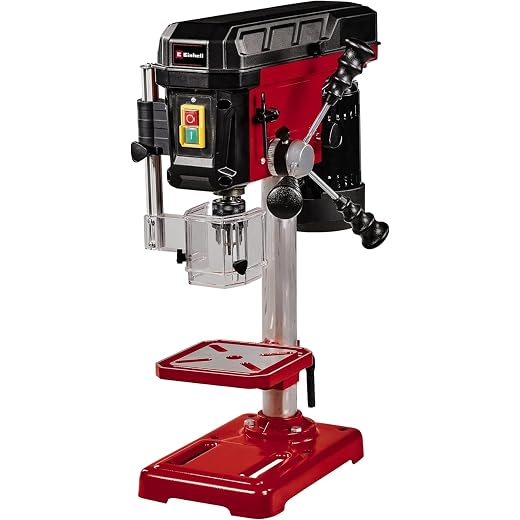
Einhell Bench Drill Press 450W Variable Speed (Max. 2650rpm)
|
|
|---|---|---|---|
|
|
|
|
|
| Build & Material | Metal and plastic housing, compact benchtop frame | Full metal construction, blue pillar-drill frame | Metal construction with stainless steel base, tilt and swivel table |
| Power & Operation | 710W, 220V, up to 2500 RPM, electronic variable speed, no belt change | 710W, 230V, up to 2600 RPM, two-range infinitely adjustable speed with digital display | 450W, 220V, up to 2650 RPM, 5-speed manual belt change |
| Capacity / Dimensions | Digital depth readout with dependable depth stop, ideal for precise repeat holes | Extra-long 100mm stroke with generous clearance for larger and repeated tasks | 50mm depth stop with display, tilt and swivel table for versatile DIY positioning |
| Standout Feature | Live digital speed and depth display with dial-in speed control | Two-range variable speed plus laser alignment and 100mm stroke | Depth stop with display plus 5 speeds and adjustable table |
| Best For | Most UK home workshops needing accurate wood and metal drilling without belt faff | Value-focused makers needing long stroke and clearance for bigger timber and batch jobs | Occasional DIY users wanting stable, simple drilling with tilt table versatility |
| Check Price on Amazon | Check Price on Amazon | Check Price on Amazon |
01
Belt-Free Precision Power That Makes Accurate Drilling Effortless
Positioned at the top of the benchtop drill press category, the Bosch PBD 40 stands out for replacing traditional belt changes with electronic variable speed and a two-gear system covering a wide range for wood and metal work. Verified owner sentiment consistently highlights its powerful motor that holds speed under load, accurate digital depth readout and physical depth stop for repeatable holes, plus integrated laser and work light for alignment. The moving motor block design, large work surface with parallel guide and quick-lock clamp add convenience for furniture, DIY and light workshop tasks. Ergonomics divide opinion, with many praising the one-knob control and slow-start safety behavior while others prefer a traditional three-spoke feed handle for heavy metal drilling. Common criticisms focus on chuck runout variability, limited grip feel with large bits, and occasional quality control inconsistency. Overall, long-term owners describe it as stable, relatively quiet and far more versatile than basic pillar drills.
- Powerful 710W motor holds set speed well under load in wood and metal
- Fast dial-in speed changes with no belt adjustments needed
- Highly accurate digital depth readout and dependable depth stop
- Helpful laser, work light, parallel guide and quick clamp system
- Stable yet movable build with smooth slow-start operation
- Stock keyless chuck can show runout or slip with large bits and may need upgrading
- Wheel feed handle offers less leverage than traditional three-spoke handles for heavy steel
- Some owners report manufacturing variability requiring exchange
02
Variable-speed power and laser-guided accuracy for bigger home workshop projects
The DP60 is designed as a versatile bench solution for home workshops and light craft use, pairing a metal column and head with a wide stable base that resists tipping without permanent bolting. Verified owner sentiment across several hundred ratings leans positive, with hobbyists highlighting straightforward assembly, smooth feed action and dependable results in timber, plastic and thin steel. Daily usability benefits from fingertip variable speed control, a live digital readout for speed and depth, quick keyless chuck changes and a versatile clamp that secures flat and round stock. The long 100mm stroke and generous chuck to base clearance stand out against shorter-travel rivals, simplifying repeated holes and deeper passes. Trade-offs are consistent rather than critical, with owners noting laser alignment can arrive slightly off, noise increases noticeably at higher revs and the integrated LED feels dim for fine detail work. Overall it presents as a practical, well specified upgrade from basic stepped-pulley presses.
- Strong 710W motor handles timber, plastic and thin steel plate with confidence
- Infinitely adjustable two-range speed control with clear digital readout
- Long 100mm stroke and generous clearance suit larger and repeated drilling tasks
- Keyless 13mm chuck and quick clamp make bit changes and workholding fast
- Laser alignment can arrive slightly off and may need recalibration
- Operating noise rises noticeably at higher speeds
- Integrated LED is helpful but feels dim for fine detail work
03
Compact 450W precision for repeatable benchtop drilling in wood and metal
The Einhell TC-BD 450 positions itself as a compact, workshop-friendly benchtop press built around a metal frame, stainless base and ball-bearing spindle for steadier daily operation. Its 450W corded motor drives a five-step belt system spanning low-torque to high-speed work, covering softwood, hardwood, plastic and light metal with appropriate bit and feed choice. In everyday use, owners highlight smooth, accurate drilling once the machine is carefully levelled, with the depth stop and scale simplifying repeat holes to 50mm and the height-adjustable table rotating and tilting for angled work. Ergonomics are thoughtful, from the three-arm rubberised feed handle to the chip guard and restart protection. Feedback is not flawless, with isolated reports of spindle runout, a modest power ceiling on dense stock and slower spare-parts support. Overall, verified sentiment frames it as a dependable, space-saving upgrade from hand-drill stands for keen DIYers seeking repeatable precision without a floor-standing footprint.
- Smooth and precise drilling for DIY tasks when levelled and set up carefully
- Versatile setup with 5 speeds, depth control and tilt and swivel table
- Stable metal construction with stainless base and favourable feed leverage
- Compact benchtop footprint fits well in small home workshops
- Manual belt-change speed selection is less convenient than stepless control
- 450W output can feel limited in dense hardwood or heavier metal work
- Isolated quality-control and spare-parts support issues reported by owners
 04
Compact cast-iron stability for straighter, easier hobby drilling
Lumberjack DP13 focuses on workshop fundamentals rather than extras, pairing a fan-cooled 300W motor with five belt-selected speeds covering slow torque work through to faster drilling in softwood, plastic and light metal. The cast-iron base and tilting table are central to its appeal, adding mass that damps vibration and helps keep holes straight and repeatable compared with lighter alloy alternatives. With 50mm spindle travel, 200mm swing and table tilt for angled work plus slots for mounting vices, it handles straight holes, fabrication tasks and hobby joinery in a compact benchtop footprint. Verified owners frequently describe smooth quill action, decent chuck trueness and straightforward assembly, with hobbyists and retired tradespeople finding it stable for light duty use. Soft-grip feed handles and a clear chuck guard support comfort and visibility. Trade-offs reflect the class, as belt changes interrupt workflow and large Forstner bits or dense hardwood can stall progress, while guard fit and cover alignment sometimes need initial adjustment.
- Cast-iron base and table reduce vibration versus lighter alloy models
- Versatile 5-speed range suits varied DIY materials and bit sizes
- Smooth quill action and reasonably true-running chuck for repeatable holes
- Compact benchtop size with tilting table and vice slots adds setup flexibility
- Manual belt changes are slower than dial or electronic speed control
- Limited power for oversized Forstner bits and heavy hardwood cuts
 05
16mm chuck power for bigger bits without stepping up to a floor model
Positioned as a step-up from entry-level 13mm presses, this KATSU model earns attention for its larger chuck capacity and straightforward workshop focus. Market research shows the cast alloy pulleys, steel table and base, and 46mm column deliver reassuring rigidity for its class, while the five-speed belt system covers low-speed metal drilling through to faster woodwork. Verified owner sentiment leans positive on assembly ease and drilling power for everyday DIY tasks, with several buyers noting smooth chuck running and adequate accuracy for general work. Balance comes from recurring practical caveats. Owners flag the short 50mm stroke as limiting for deeper work, and assembly guidance is described as sparse or missing pages. Isolated quality-control reports involving a non-true column and a sticky belt-cover safety interlock temper confidence, suggesting careful initial setup and alignment checks are wise. For users prioritizing large-bit compatibility in a compact 580mm bench footprint, it remains a capable, no-frills contender.
- Generous 16mm chuck extends range beyond typical 13mm bench models
- 400W motor with five selectable speeds suits wood, plastic and light metal
- Sturdy steel table and base with height adjustment for flexible setups
- Front emergency stop and chuck guard add everyday safety reassurance
- Short 50mm spindle travel limits deep drilling
- Assembly documentation reported as sparse or incomplete by owners
- Isolated quality-control issues including alignment and safety interlock faults
 06
Belt-free variable speed and laser guidance on a rock-solid cast-iron bench platform
The DP19VARIO positions itself as a convenience-first benchtop press built around a 550W motor and cast-iron frame weighing over 27kg, which owners consistently credit for low vibration and confident drilling in wood, steel, aluminium, plastic and tile. The defining feature is the side-lever variator with digital readout covering roughly 440 to 2580rpm, removing the usual belt and pulley faff and making material-matched speeds genuinely usable day to day. Practical touches include a 1.5 to 13mm keyless chuck, crosshair laser for repeatable placement, 60mm quill travel for deeper holes and countersinking, plus a 198 by 194mm table that raises, rotates and tilts 45 degrees each way. Sentiment across several hundred verified owners skews positive on sturdiness, easy assembly and responsive after-sales support. Trade-offs are modest but consistent, with limited quill travel for larger work, battery-dependent laser upkeep and occasional table-rack and chuck niggles requiring careful setup.
- Tool-free stepless speed change with clear digital display suits multiple materials
- Heavy cast-iron construction delivers excellent stability for its class
- Tilting and rotating table enables controlled straight and angled work
- Laser guide plus keyless chuck speeds up setup and repeatable hole placement
- 60mm quill travel feels restrictive for deeper or larger workpieces
- Battery-powered laser needs manual switch-off and has a fiddly battery compartment
- Table rack can shift during height adjustment and benefits from careful locking and setup
 07
Laser-guided accuracy and five-speed flexibility for easy home workshop drilling
Positioned as an accessible entry into bench drilling, the Arebos column model pairs a compact cast iron and steel frame with a 500-watt motor and manual five-step belt drive from 550 to 2500 rpm. Verified owner sentiment frames it as a capable light-duty performer for wood, plastics and thin metal, with smooth, relatively quiet running that suits small home workshops. Ergonomics are practical: the height-adjustable table tilts to 45 degrees for angled work, the geared 13mm chuck holds bits securely, and the included vice helps stabilize smaller parts. The integrated positioning laser is widely cited as useful for alignment once fitted, though owners note instructions gloss over battery access and belt changes feel tight at first. Assembly is generally reported as quick with basic tools. Build is lighter than professional presses and speed changes remain manual, but for hobbyists seeking guided precision on occasional projects, feedback points to solid everyday utility.
- Integrated laser aid helps with alignment and accurate hole placement
- Five belt-driven speeds offer useful versatility across soft and harder light-duty materials
- Tilting table plus included vice adds flexibility for angled work and small parts
- Owners report quick assembly, smooth relatively quiet operation and solid value for hobby use
- Manual belt changes feel tight and instructions are sparse, especially for laser battery fitting and first-time setup
- Lighter-duty build not suited to professional or continuous heavy workshop use, with isolated reports of switch issues
Buyer Questions and Expert Answers
What is the best overall benchtop drill press for most UK home workshops?
The Bosch Bench Drill PBD 40 stands out for most users because its 710W electronic variable-speed motor holds set speed under load, with dial-in changes and live digital speed and depth display. That makes switching between wood, plastic and thin steel fast and repeatable without opening the head to move belts.
Electronic variable speed vs manual belt change — which should I choose?
Choose electronic or two-range stepless control if you drill mixed materials and hole sizes often — it is faster and more precise. Choose manual 5-speed belt change only for light, occasional DIY where you can set one speed and leave it, as belt moves are slower but mechanically simple.
Can these drill presses handle both wood and metal?
Yes, with correct speed and bits. Use high RPM for small bits in wood and plastic, low RPM with cutting fluid and firm feed for steel. The 710W models cope better with thin steel plate, while the 450W model is best kept to timber, plastic and light metal after careful levelling and clamping.
Why is my chuck wobbling or laser misaligned, and how do I fix it?
Stock keyless chucks can show runout with large bits — clean the jaws, reseat the bit fully, tighten in stages and consider an upgraded chuck for heavy steel. If the laser is off, recalibrate against a test hole on scrap, check table squareness to the bit with a square, and lock the table before drilling.
How do I maintain a benchtop drill press for maximum longevity?
Bolt it to a level bench, vacuum dust from vents and belt housing, wipe and lightly oil the column and table, check belt tension and chuck tightness periodically, and verify depth stop and laser alignment. Avoid forcing dull bits, let the motor reach speed first, and reduce speed for large Forstner or hole-saw work to limit heat and noise.
The Bottom Line
- 🏆 Top Overall Choice: Bosch Bench Drill PBD 40 (Parallel Guide) — best electronic speed control and digital depth accuracy for wood and metal
- 💰 Best Value: Scheppach DP60 Bench Pillar Drill — 710W power, two-range stepless speed and 100mm stroke for larger tasks
- ⭐ Premium Pick: Einhell Bench Drill Press 450W Variable Speed (Max. 2650rpm) — stable, versatile DIY choice with 5 speeds and tilt table
For most UK buyers, precision, power and convenience matter more than headline RPM, and the Bosch PBD 40 balances all three with stepless electronic control and trustworthy digital depth. If you need maximum stroke and clearance for larger batch work on a tighter setup, the Scheppach DP60 is the smarter value alternative. Light, occasional DIY users who will set up carefully and work mainly in timber will still be well served by the compact Einhell 450W press with its depth stop and tilting table.
Leave a Reply