
Should you buy big enough to survive a UK power cut and run a fridge, or stay light enough to actually carry to a tent, van or allotment? With cloudy British weather, slow solar can leave you stranded, while oversized stations become heavy, outlet-limited boxes you rarely move. The real choice for 2026 is balancing usable capacity, true AC output, and recharge speed that works even when the sun doesn't.
Top Recommendations at a Glance


Key Takeaways and Quick Advice
|
Jackery Explorer 1000 v2, 1kWh Portable Power Station with 200W Solar Panel
|
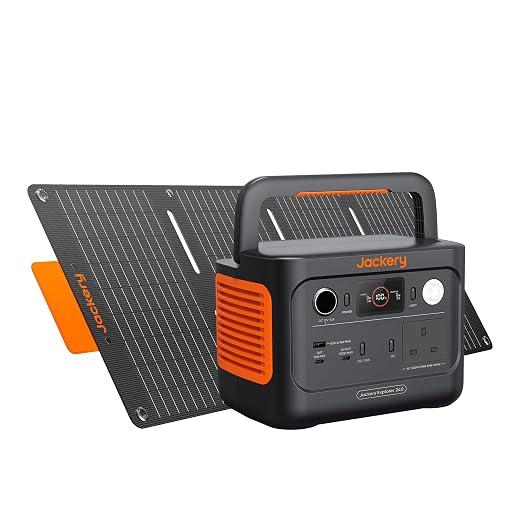
Jackery Solar Generator 240 v2, 256Wh Power Station with 40W Solar Panel
|
Anker SOLIX C1000 Gen 2 with AC charging cable, 2000W 1024Wh Power Station
|
|
|---|---|---|---|
|
|
|
|
|
| Build & Material | LiFePO4 core with ChargeShield 2.0 (62 protections), CE certified fire and shock-resistant housing + IP68 200W folding solar panel | LiFePO4 core rated 3,000+ cycles, lightweight 3.5kg ABS handheld housing with integrated camping light + 40W folding panel | LiFePO4 core with HyperFlash management, compact impact-resistant housing 14% smaller, grab handles and smart display |
| Power & Operation | 1500W AC continuous, 3000W surge, 100W PD USB-C in/out, 2x UK AC outlets, app control, 1-hour AC fast charge | 300W AC continuous, 100W PD USB-C fast charge, 5-port hub (AC + DC + USB), 1-hour AC fast charge, 100W max solar input | 2000W AC continuous, 3000W surge, 9 ports total, 1600W HyperFlash AC input for 49-min recharge via app enable |
| Capacity / Dimensions | 1070Wh capacity, mid-size portable station with reduced footprint vs previous generation, mains + solar combo kit | 256Wh capacity, 3.5kg ultra-portable handheld size ideal for tents, day trips and van cab storage | 1024Wh capacity, compact and 11% lighter than rivals in class, easy-carry form for home backup and workshop use |
| Standout Feature | 1070Wh LFP battery with 1500W output, 1-hour AC charge and weatherproof 200W solar panel included | Long-life LiFePO4 core with 300W output and fast mains plus solar recharging in a 3.5kg design | 49-Minute HyperFlash UltraFast Recharging with 2000W Output |
| Best For | Home backup, family camping and off-grid cabins needing fridge and multi-device power | Solo campers, vanlifers and commuters needing light, grab-and-go laptop and phone power | Power users running microwaves, air fryers, power tools and full home-office backup |
| Check Price on Amazon | Check Price on Amazon | Check Price on Amazon |
01
Weekend-Ready 1kWh Power With 1-Hour Fast Charging And Solar Freedom
The Explorer 1000 v2 stands out as a well-rounded solar generator built around a long-life lithium iron phosphate core rated for thousands of cycles, which positions it strongly for multi-year camping and backup use. Market research points to a compact, neatly finished housing with ergonomic handle, clear display and integrated lighting that owners find easy to move between campervan, tent and home office. In daily use, the 1070Wh capacity and 1500W pure sine wave output with high surge headroom comfortably handles fridges, laptops, phones, lighting and small cooking appliances, while dual USB-C with high-watt power delivery plus USB-A, car and AC outputs support simultaneous charging. Verified owners repeatedly praise reliable weekend runtime with solar top-ups and straightforward panel setup. Trade-offs are modest but worth noting, with real-world recharge times varying with sunlight and selected charging mode, and only two AC sockets for larger kits, making planning around weather important for off-grid trips.
- Strong 1070Wh capacity with high 1500W output easily runs fridges and multiple devices at once
- Fast AC recharging plus flexible solar input keeps downtime short between adventures
- Durable LFP chemistry and comprehensive safety system inspire long-term confidence
- Portable design with handle, clear display, versatile ports and built-in LED for campsite use
- Real-world AC and solar recharge speeds can fall short of headline claims depending on mode and sunlight
- Only two AC outlets, which may feel limiting for larger multi-appliance setups
02
Pocketable 256Wh LiFePO4 Power That Keeps Camp and Home Essentials Running
Positioned as an entry-level solar generator, the Explorer 240 v2 pairs a 256Wh lithium iron phosphate pack with a 300W AC inverter and a compact 40W mini panel, all in a 3.5kg handheld form that suits camping, picnics and roadside stops. Market research points to durable plastics, a clean multi-port layout with 100W USB-C Power Delivery for up to five devices, plus a built-in light, app monitoring over Bluetooth and Wi-Fi, and a 20ms switchover for routers and laptops during outages. Verified owners consistently praise fast mains top-ups, reliable low-wattage output for phones, tablets, lamps and small fridges, and responsive after-sales support. Trade-offs are true to the class, with real-world solar input often below the panel rating and a full sun-only recharge taking most of a day, while the modest capacity means high-draw appliances drain it quickly. Ideal as a dependable light-duty hub rather than a whole-home backup.
- Durable LiFePO4 chemistry built for thousands of cycles and long service life
- Highly portable handheld build ideal for tents, vans and day trips
- Versatile 5-port hub with 100W USB-C fast charging and 300W AC
- Quick mains recharging with useful app monitoring and battery-saving modes
- 20ms backup switchover and safety certifications add peace of mind for outages
- Included 40W panel needs strong, well-angled sun and takes most of a day for a full charge
- 256Wh capacity runs down quickly with kettles, cookers and other high-draw loads
- Station and panel may ship separately and car charging cable is not included
03
2000W of Grab-and-Go Power That Refills in Just 49 Minutes
Positioned as a refined second-generation unit, the SOLIX C1000 Gen 2 pairs a metal-framed chassis with durable plastic casing around a long-life LiFePO4 battery rated for thousands of cycles. Market research shows owners consistently praise its surprisingly compact footprint and dual grab handles, clear informative display, and solid, confidence-inspiring build. In daily use, the 1024Wh capacity and 2000W output with 3000W peak capably runs fridges, microwaves, air fryers, drills, routers and cameras, while the sub-10ms UPS function adds reassurance for home backup. The headline HyperFlash recharge and efficient solar input earn frequent mention for turnaround speed, and the companion app with Standard and Time-of-Use modes is widely described as intuitive for remote monitoring. Trade-offs noted include no expansion battery option and temperature sensitivity for peak charging speed, but overall verified sentiment skews strongly positive for reliability, portability and versatility. It suits campers, van lifers and outage-conscious households seeking fast, grab-and-go power.
- Exceptionally fast AC recharging dramatically cuts downtime between uses
- Strong 2000W output capably runs fridges, microwaves, air fryers and power tools
- Compact, lighter build with grab handles and clear display is easy to carry and operate
- Long-life LiFePO4 chemistry with 5-year coverage inspires long-term confidence
- Highly rated app with UPS support and Time-of-Use scheduling for smarter backup
- No expansion battery support, so users needing more capacity must choose a larger model
- Peak recharge speed requires warm battery temperature and app activation
- 1024Wh capacity can feel limiting for extended multi-day backup without solar top-up
 04
1000W of Real-World Power With Four AC Outlets for Camping and Outages
The K10 positions itself as a straightforward, high-output backup for camping, RV life and home outages, pairing a 1000W pure sine wave inverter with 666Wh of storage in a compact aluminium-framed box. At around 7.6kg and roughly shoebox dimensions, verified owners consistently describe it as easy to stash, carry and deploy, often arriving nearly fully charged for immediate use. Day to day, four 230V AC outlets stand out, letting users run a coffee maker, TV and fan, reptile heating, or even a full DJ rig with powered speakers for hours on a single charge. Protection for heat, short-circuit and overload adds confidence for sensitive electronics. Trade-offs reflect the value engineering: USB is limited to basic 5V outputs with no fast USB-C, the cooling fan is audible under heavy load, and surge headroom above 1000W trips quickly into protection. Solar input also divides opinion due to unclear voltage guidance and delicate barrel jacks.
- Genuine 1000W output reliably runs coffee makers, TVs, fans, heaters and small kitchen appliances
- Four AC outlets is generous for this class and ideal for shared or family use
- Compact and portable at 7.65kg with easy setup and near-full charge on arrival
- Full recharge in around 4 hours via AC with useful overload and temperature protection
- Solar charging guidance is inconsistent across languages and barrel inputs feel undersized for high current
- No fast USB-C PD, only basic 5V USB-A ports
- Cooling fan buzz under load and very short surge tolerance before overload protection trips
 05
Pocketable 288Wh backup that powers laptops all day and recharges in under an hour
Positioned as a compact everyday backup rather than a whole-home solution, the C300 pairs a 288Wh LiFePO4 pack with 300W continuous output in a dense, well-finished chassis that owners consistently describe as solid and easy to carry despite its four-kilo weight. Market feedback highlights everyday practicality: multiple USB-C ports plus AC and car outputs comfortably cover laptops, phones, lights, routers and cool boxes, while the bright display and companion app make input, output and remaining runtime easy to follow. Recharging is a clear strength, with fast wall top-ups to 80 percent in under an hour and flexible USB-C, car and solar options for off-grid use. Longevity also stands out thanks to a 3,000-cycle chemistry, smart thermal management and extended warranty coverage. Trade-offs are honest for the size: continuous AC power stays modest, solar compatibility is narrow, and very low-draw gadgets can be temperamental for camping, travel and short outages.
- Very fast wall and 140W USB-C recharging for quick turnarounds
- Long-life LiFePO4 chemistry rated for 3,000 cycles with 5-year warranty
- Compact, solid build with intuitive display, app control and quiet running
- Flexible 7-port layout plus solar and car recharge options for off-grid use
- 300W continuous AC cannot sustain kettles, heaters or other high-draw appliances
- Solar input is narrowly specified and car plus solar cables are sold separately, while very small low-draw devices can charge inconsistently
 06
Pocket-size 200W DC power plus 60W solar for endless off-grid charging
Positioned as a DC-only alternative to bulky AC stations, the C200 DC pairs a 192Wh LiFePO4 core with 200W total output in a dense 1.9kg brick measuring under 19cm long. Market research shows owners value its premium-feeling shell, clear status display and companion app for tracking input versus output in real time. Daily utility centers on five-way charging, led by a 140W two-way USB-C plus 100W USB-C, making it adept at running laptops, drones, Switch consoles, portable monitors and Starlink Mini for around five hours. The bundled foldable 60W panel earns praise for topping up faster than three phones can drain, even delivering trickle charge in overcast festival weather. Trade-offs are real: there is no AC socket, no wall brick in the box, and solar input is picky about voltage and panel type. One indoor-use label also confuses outdoor buyers despite camping-focused marketing. Still, for lightweight backup it consistently satisfies.
- Ultra-compact 39% smaller design that still powers laptops, monitors and Starlink Mini
- Blazing 140W two-way USB-C enables rapid top-ups and high-watt laptop output
- Long-life LFP chemistry backed by 3-year warranty and helpful smart app
- Well-made 60W foldable panel delivers usable charge even in dull or rainy light
- DC-only with no AC socket, so kettles, routers with mains plugs and larger appliances are out
- No wall charger included and solar input is restricted to specific voltage and panel types
- Indoor-use labeling contradicts outdoor marketing and creates warranty confusion
 07
Pocketable 1kWh Power That Recharges in Under an Hour and Thrives on the Road
Positioned as the travel-ready member of DJI’s power lineup, the Power 1000 Mini pairs a 1008Wh LFP pack with 1000W continuous output in a 40cm chassis with integrated carry handles. Market research and verified owner sentiment consistently highlight premium DJI fit and finish, near-silent operation overnight, and a clear digital display showing input, output and runtime. Daily utility centers on speed and flexibility: owners report topping up from low to full in well under an hour from the wall, running laptops, lighting, coolers, power tools and phones simultaneously, and recharging quickly on the move via the included car power cabling and built-in MPPT solar input. The retractable USB-C cable, app monitoring, UPS support and adjustable LED add everyday convenience for camping, van life and outage cover. Trade-offs emerge around ecosystem costs, with some owners needing extra modules or cables for solar, and wishing for a native 12V cigarette port.
- Compact yet sturdy build with integrated handles and clear power display
- Exceptionally fast wall recharging and quiet overnight operation
- Strong road versatility with included car cabling and direct solar input
- Reliable multi-device output for laptops, coolers, lights, tools and mobiles
- Solar setup can require extra modules or specific cables for some panels
- No native cigarette-lighter socket on the unit itself, limiting direct 12V accessories
Buyer Questions and Expert Answers
What is the best overall choice for most homes in the United Kingdom?
The Jackery Explorer 1000 v2 is the most balanced pick. Its 1070Wh capacity and 1500W output will keep a fridge-freezer, router, lights and laptops running through a power cut, while still being compact enough for camping. The 1-hour mains recharge and included 200W weatherproof panel give you both fast turnaround and off-grid top-ups.
What size power station do I need for camping vs home backup?
For tent camping and day trips, 240-300Wh is plenty for phones, camera batteries, LED lights and a laptop for 1-2 days. For vanlife or home backup with a fridge, air fryer or power tools, step up to 1000Wh+. Always add up the watts of what you will run at once, then add 20% headroom for surge on motors and compressors.
Can these power stations run a UK kettle, heater or microwave?
Only high-output models can. A standard kettle draws 2000-3000W, so the 300W Jackery 240 v2 will not run it. The Anker SOLIX C1000 Gen 2 with 2000W continuous can handle microwaves, air fryers and many kettles, while the 1500W Jackery 1000 v2 covers most fridges, induction plates and mid-size appliances. Check the appliance rating plate first.
How practical is solar charging in cloudy UK weather?
Useful as a trickle, but not reliable as your only source. A 40W panel may take a full bright day to refill a 256Wh unit, and much longer in overcast conditions. Treat solar as free extension for lights and phones, and rely on fast AC charging before trips or storms. Angle panels directly to the sun, avoid shade, and keep them clean for best yield.
How do I maintain a LiFePO4 power station for maximum lifespan?
Store at 50-80% charge in a cool, dry indoor space, not a damp garage. Top up to that level every 3 months, run a full 0-100% cycle every 6 months to calibrate the display, keep vents dust-free, and avoid draining high-heat appliances back-to-back. Enable any eco or battery-care mode in the app and update firmware when prompted.
The Bottom Line
- 🏆 Top Overall Choice: Jackery Explorer 1000 v2, 1kWh Portable Power Station with 200W Solar Panel — best balance of 1070Wh capacity, 1500W output and 1-hour recharge for home and outdoors
- 💰 Best Value: Jackery Solar Generator 240 v2, 256Wh Power Station with 40W Solar Panel — ultra-light 3.5kg pick for tents, vans and everyday essentials
- ⭐ Premium Pick: Anker SOLIX C1000 Gen 2 with AC charging cable, 2000W 1024Wh Power Station — 49-minute recharge and 2000W muscle for microwaves, tools and serious backup
For most UK buyers in 2026, usable output and recharge speed matter more than headline capacity. If you want one station that covers power cuts, family camping and van trips without being unmanageable, the 1kWh class hits the sweet spot. Go smaller only if true portability is your priority, and go for maximum watts only if you regularly run heating, cooking or workshop tools. All three winners share long-life LiFePO4 safety and fast mains charging, so choose by how much you need to power at once and how far you need to carry it.
Leave a Reply